Birk Janz
Menu
Work
About
Contact

Case Study
Lylli
Lylli is a children’s reading and audiobook platform designed to help families build sustainable reading habits through playful and engaging digital experiences.
Available across mobile and web, the product serves families in Swedish- and German-speaking markets and is currently expanding into English-speaking markets. The platform combines books, audio, reading motivation systems and content discovery experiences designed specifically for young children.
- Role: Sole Product Designer
- Period: 2023–Present
- Platforms: iOS, Android, Web, Internal Tools
- Markets: SE, DE, AT, CH, US (launch phase)
- Scope: Product Strategy, UX, UI, Design Systems, AI Prototyping, Content Architecture, Research
Shaping the Product
Over the last 3.5 years, I’ve helped shape Lylli as it grew from an early-stage reading app into a multi-market product experience used by thousands of families across Europe and North America.
As the sole designer for most of this journey, I’ve worked across product strategy, UX, UI, design systems, onboarding, engagement features and internal tooling. My role has evolved alongside the company, combining hands-on product design with systems thinking, rapid prototyping and AI-assisted workflows.
Focus Areas
- Product strategy and UX
- Engagement and reading motivation
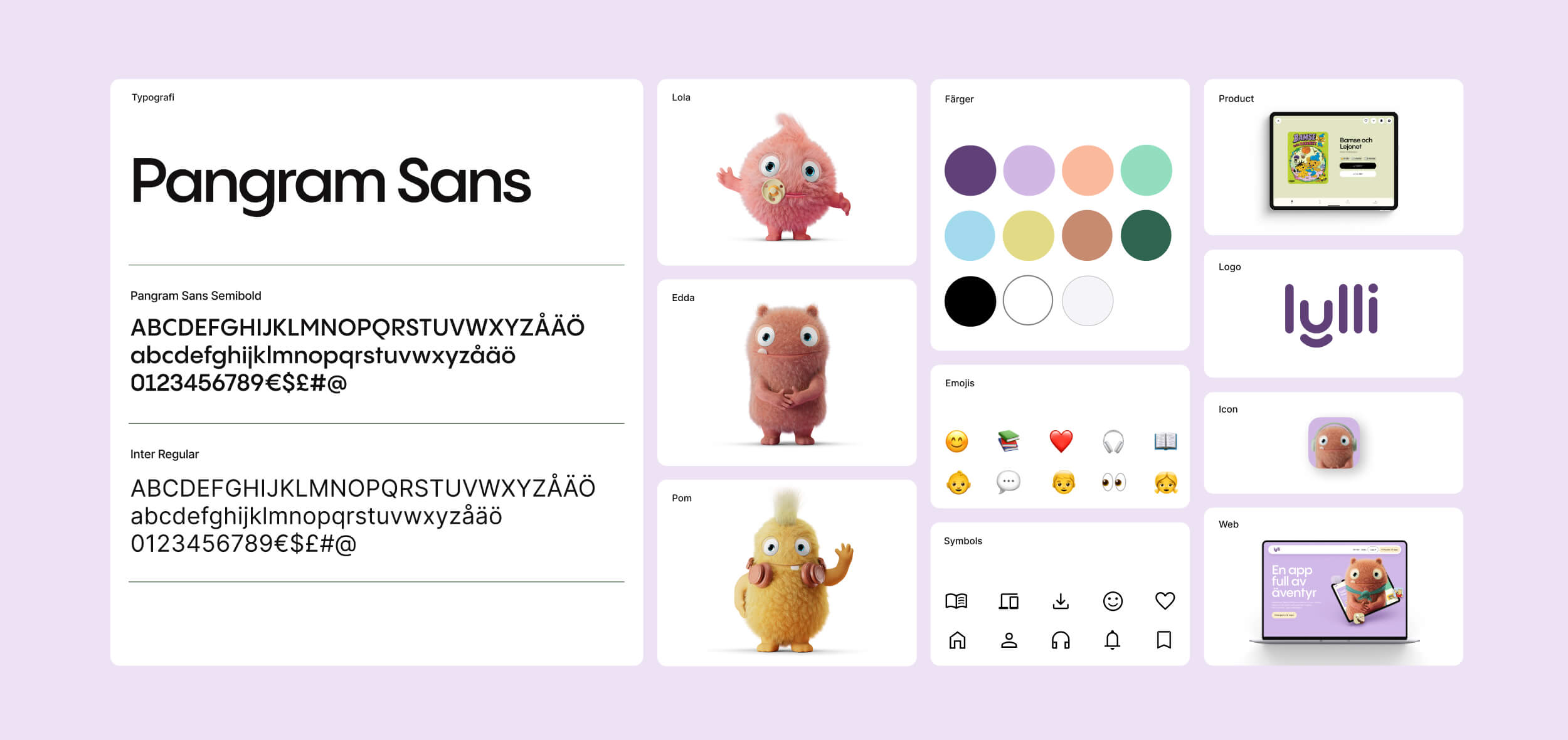
- Product UI and design systems
- AI-assisted prototyping
- Internal tooling and content systems
- Cross-platform product experiences
Contributions
- Helped scale Lylli from an early-stage product into a multi-market platform
- Established the visual product foundation across app, web and internal tools
- Led the design of onboarding and long-term engagement experiences
- Introduced AI-powered workflows that significantly accelerated prototyping and product validation
- Built implementation-ready concepts that enabled faster collaboration between design and engineering
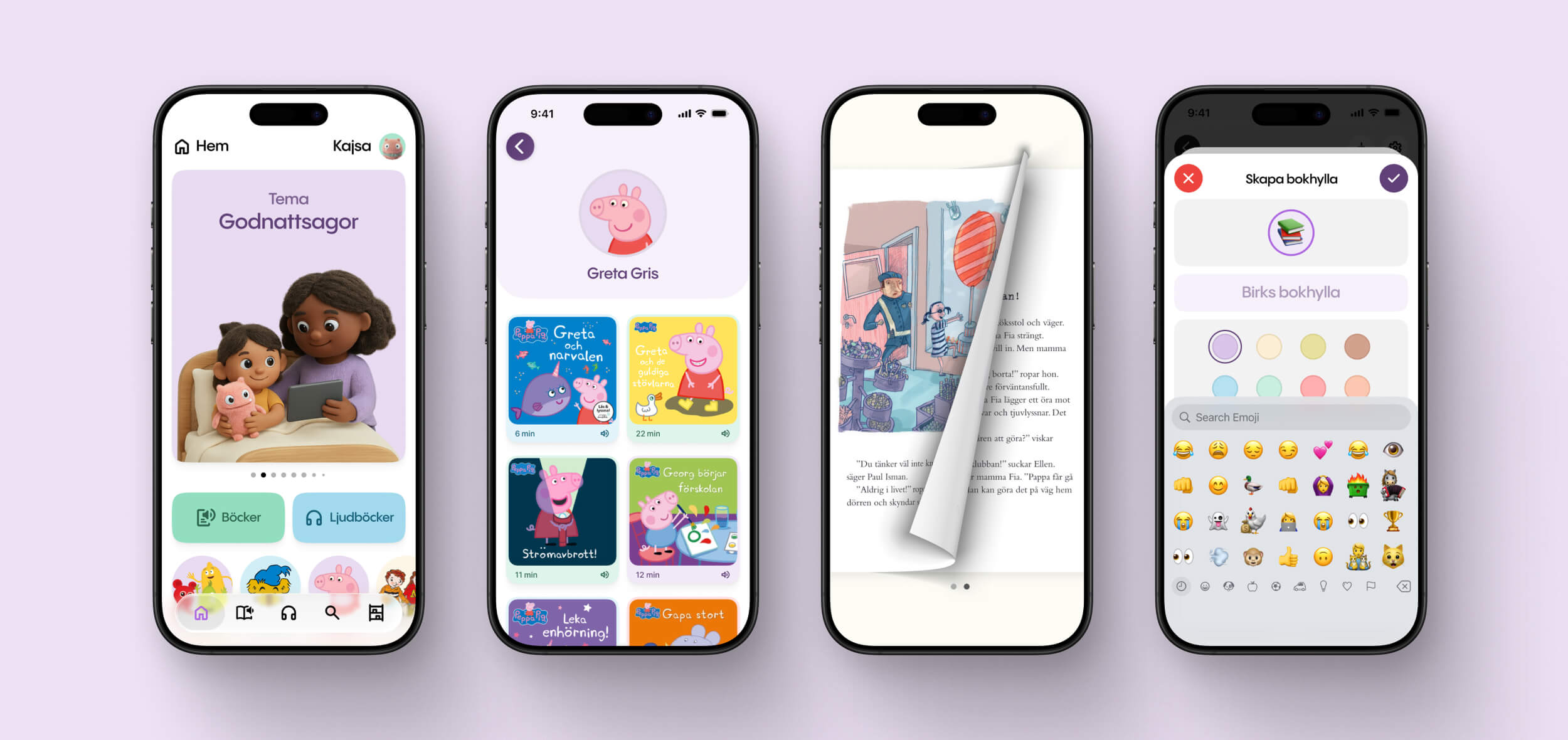
Driving Product Evolution
Beyond designing individual features, I’ve played an active role in shaping how the product evolves over time, connecting business goals, user needs and technical possibilities into cohesive product experiences.
Working closely with product managers, UX researchers, developers and other stakeholders, I’ve contributed throughout the entire product development process, from product strategy, customer insights and discovery to concept development, prototyping, implementation, QA and release validation. This continuous involvement allows me to make design decisions that remain grounded in both user needs and technical reality.
As the product has matured, much of my work has focused on creating scalable foundations rather than isolated features. This includes evolving the design system, refining interaction patterns, improving onboarding, strengthening content discovery and introducing workflows that allow both the product and the organisation to grow more consistently over time.
Rather than viewing design as a handoff, I see it as an ongoing responsibility. Staying closely involved throughout implementation helps ensure that strategic ideas translate into polished, accessible and technically feasible products, while continuously improving the quality of future work through reusable systems and shared product knowledge.
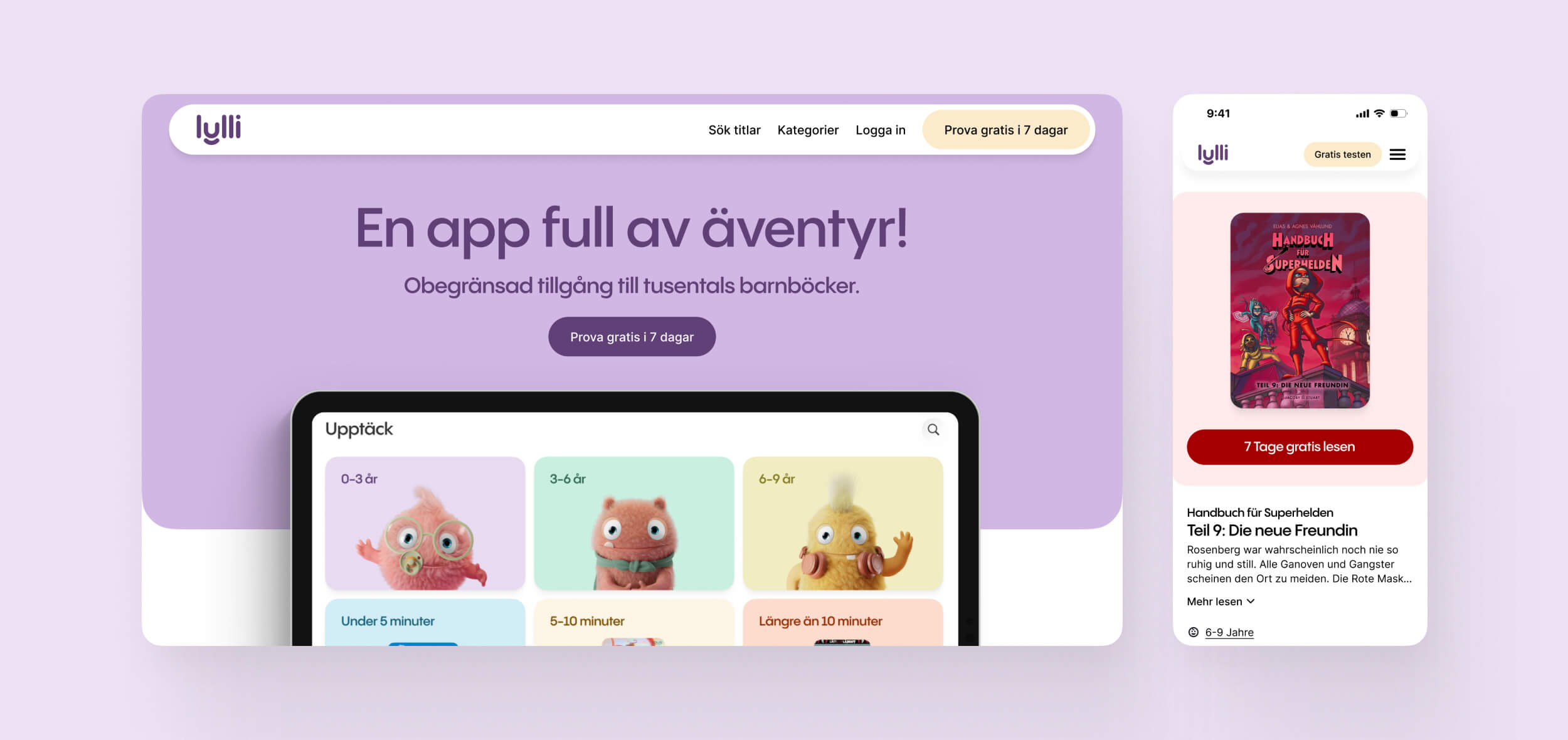
Designing Reading Motivation
Creating motivation that strengthens, rather than competes with, the reading experience
One of the recurring product challenges at Lylli has been encouraging children to return to reading without shifting attention away from what matters most: the stories themselves.
Rather than relying on traditional gamification, I explored how motivation could become a natural extension of the reading experience. The goal wasn’t to maximise engagement, but to build curiosity, routine and emotional connection in ways that felt meaningful for both children and parents.
One example of this thinking is Reading Rocket, a seasonal reading experience where completed books fuel a shared journey through space alongside one of Lylli’s characters.
Throughout the project, the focus remained on simplifying interactions, reducing cognitive load and ensuring that every motivational element supported reading rather than competing with it.
More than a single feature, the project established a design approach for future engagement systems, showing how thoughtful product design can strengthen long-term reading habits without relying on distracting reward mechanics.
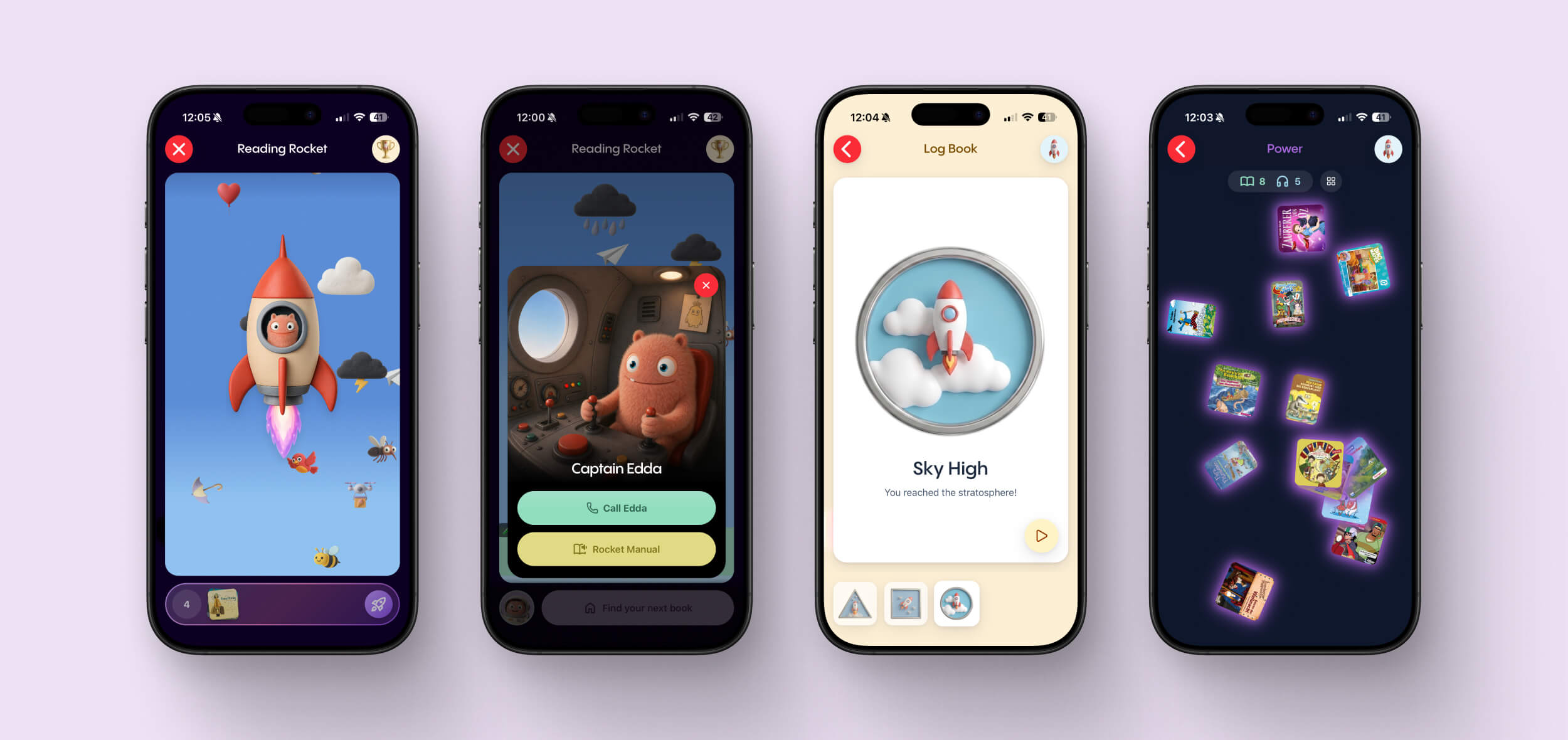
AI-Driven Product Development
Building complete product experiences through AI-powered workflows
Over the past year, AI has fundamentally changed the way I work as a Product Designer. Rather than using it simply to work faster, I’ve integrated AI throughout my design process to build, prototype and validate complete product experiences that previously required contributions from several specialist disciplines.
Instead of stopping at wireframes or static mockups, I now create interactive prototypes that combine product logic, visual design, motion, voice experiences and supporting content into cohesive experiences. This allows stakeholders and users to interact with concepts that feel much closer to real products, resulting in more meaningful feedback and faster iteration throughout the design process.
Projects like Reading Rocket demonstrate this shift. Beyond designing the experience itself, I developed the progression logic, created the visual assets using AI image generation, produced motion assets, generated AI-powered voice experiences and designed supporting onboarding content. AI enabled me to independently build and validate an end-to-end product experience that would traditionally have required multiple teams and significantly longer development cycles.
Today, AI is embedded across my entire workflow. From expanding design systems in Figma and generating production-ready assets to building functional prototypes and implementation-ready concepts, it allows me to move seamlessly between strategy, design and execution. Rather than replacing product design, AI has expanded what I’m able to build, making it possible to validate ideas earlier, collaborate more effectively and deliver significantly more complete product concepts before engineering begins.
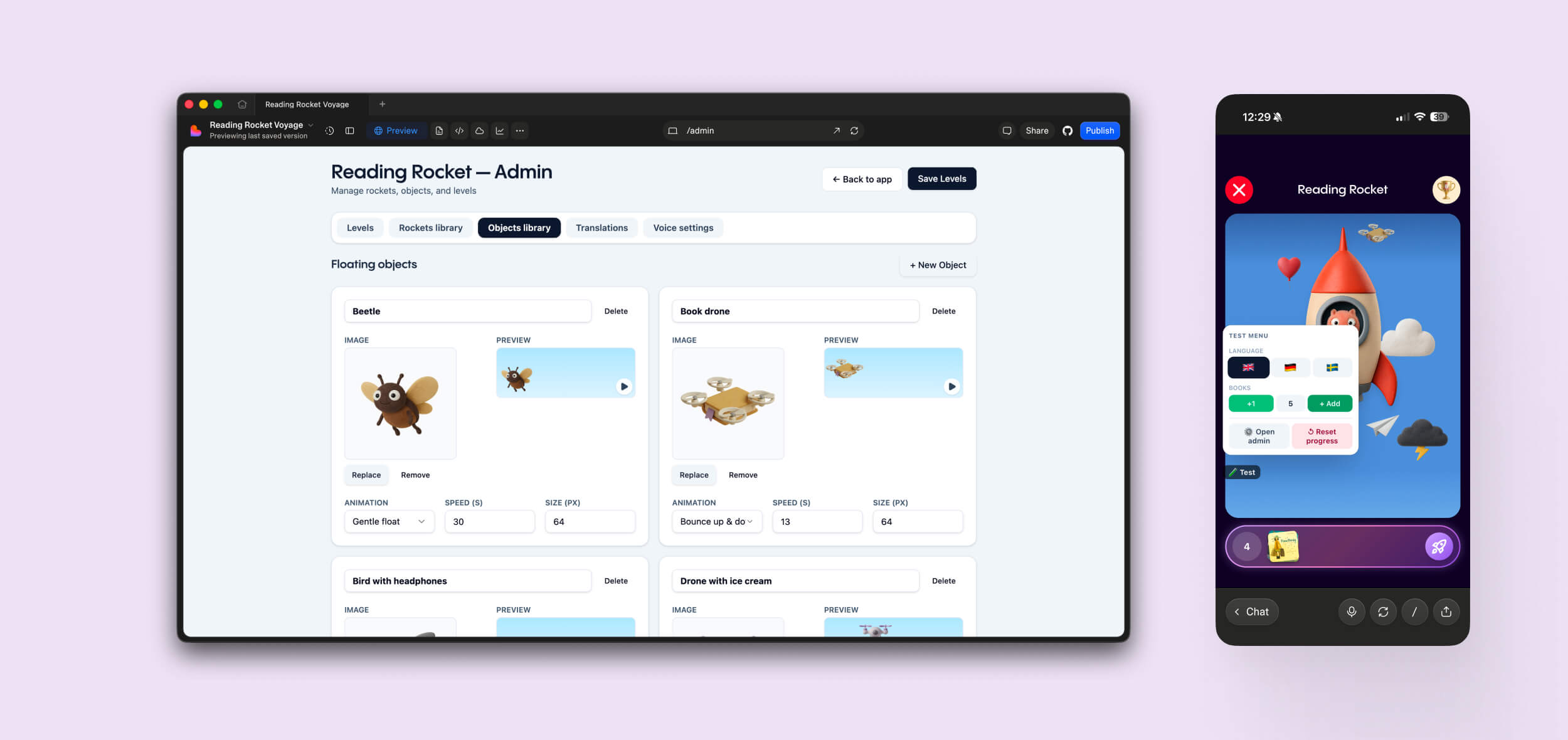
Designing Scalable Content Systems
Creating the foundation for personalized content experiences
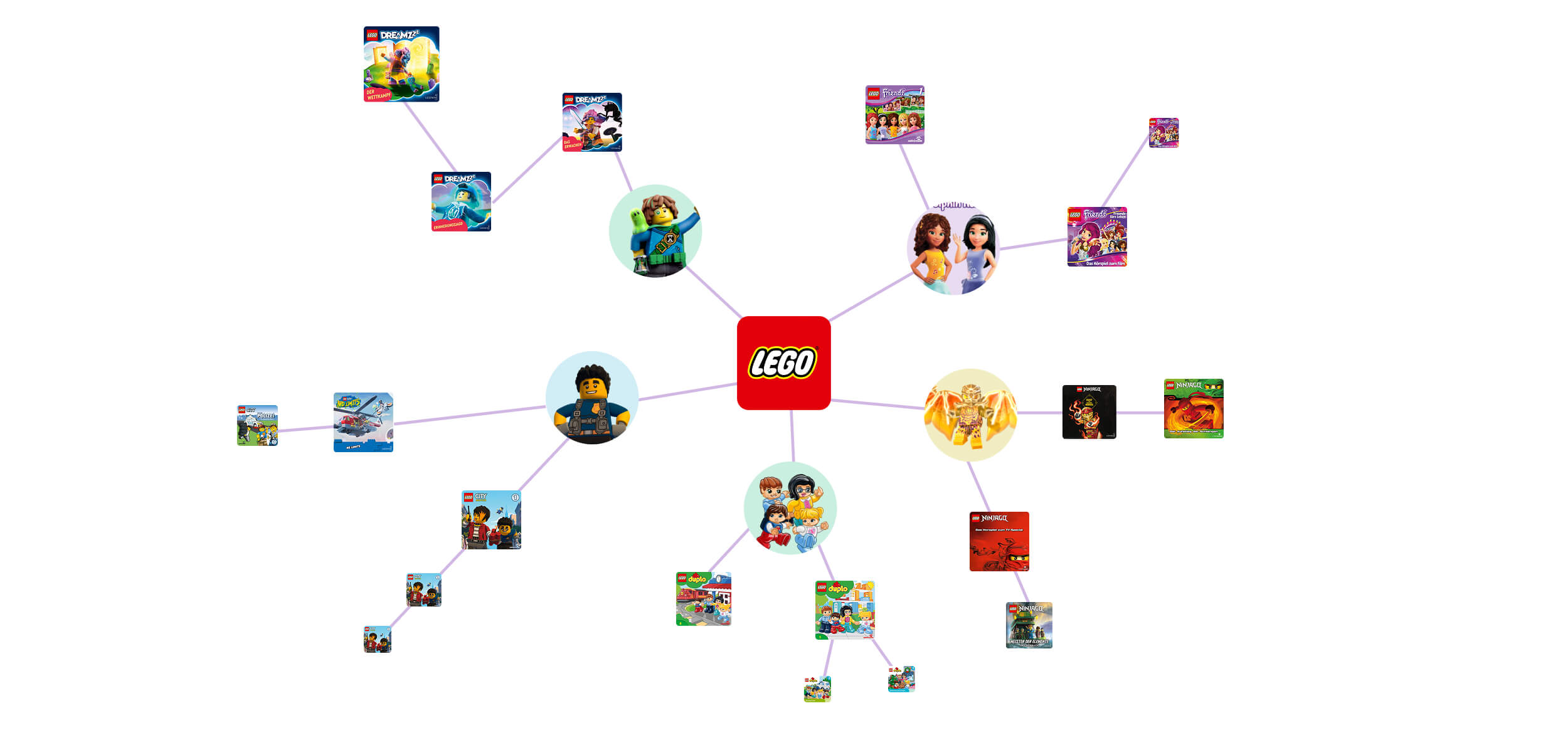
At Lylli, the books themselves are only one part of the product. The real user experience is shaped by how content is organised, connected and presented to every child. As our library continued to grow across languages and markets, creating meaningful reading experiences increasingly depended on building the right content foundation behind the scenes.
This project began by understanding the underlying system rather than designing interfaces. Through research, stakeholder workshops and close collaboration with the content team, I mapped relationships between books, themes, collections, characters and editorial workflows to create a scalable information architecture capable of supporting future growth.
The objective wasn’t simply to improve internal processes. It was to enable smarter content discovery, more relevant recommendations and richer reading journeys by giving the product a stronger understanding of its own content.
Working iteratively with functional prototypes allowed us to validate complex workflows early while creating a shared understanding across design, product and engineering before implementation began.
Although largely invisible to end users, this work has become a strategic foundation for the product. By strengthening the underlying content structure, we’ve created better conditions for personalization, editorial curation and future product experiences that help every child discover the right stories at the right time.
Crafting Cohesive Product Experiences
Designing interfaces that feel intuitive before they need explanation
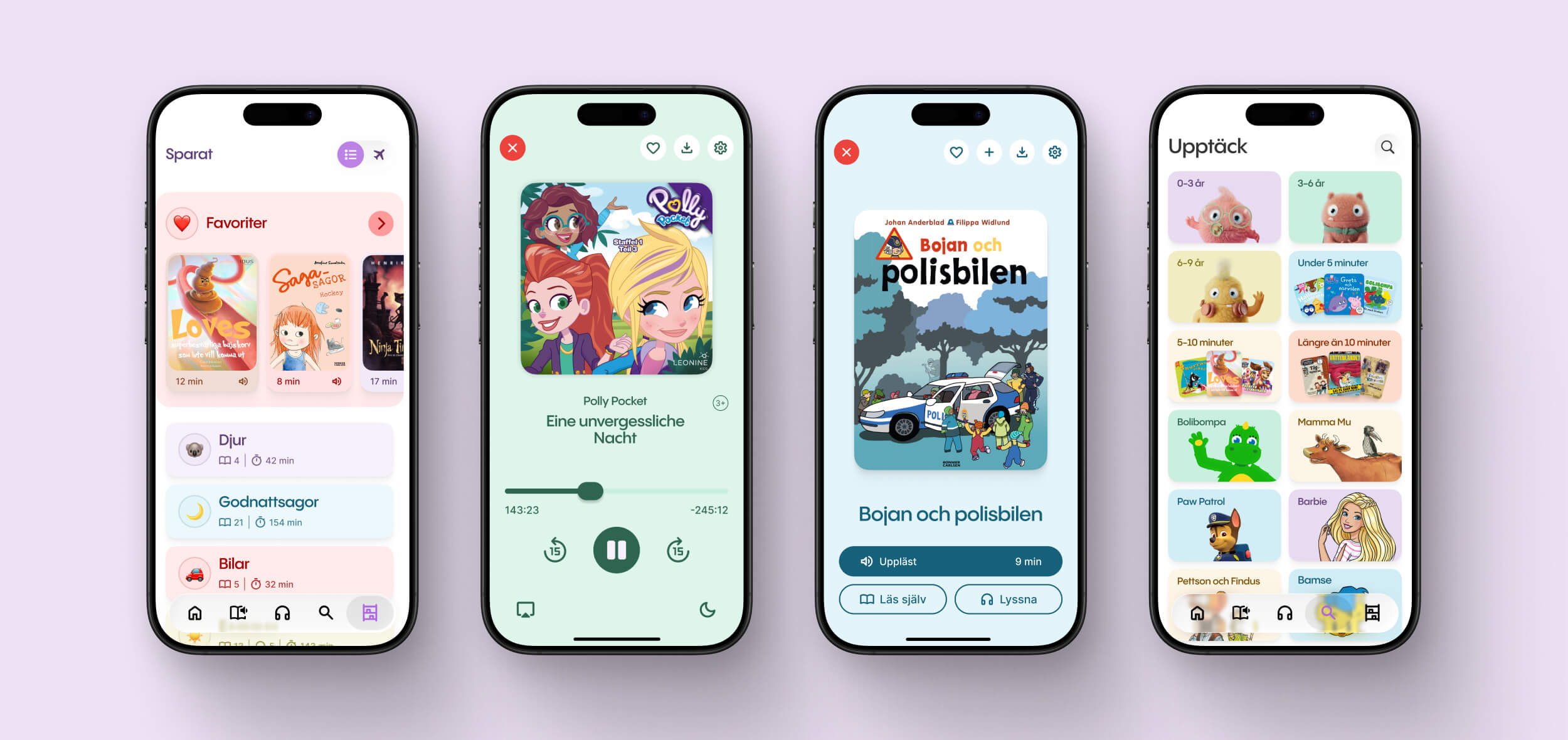
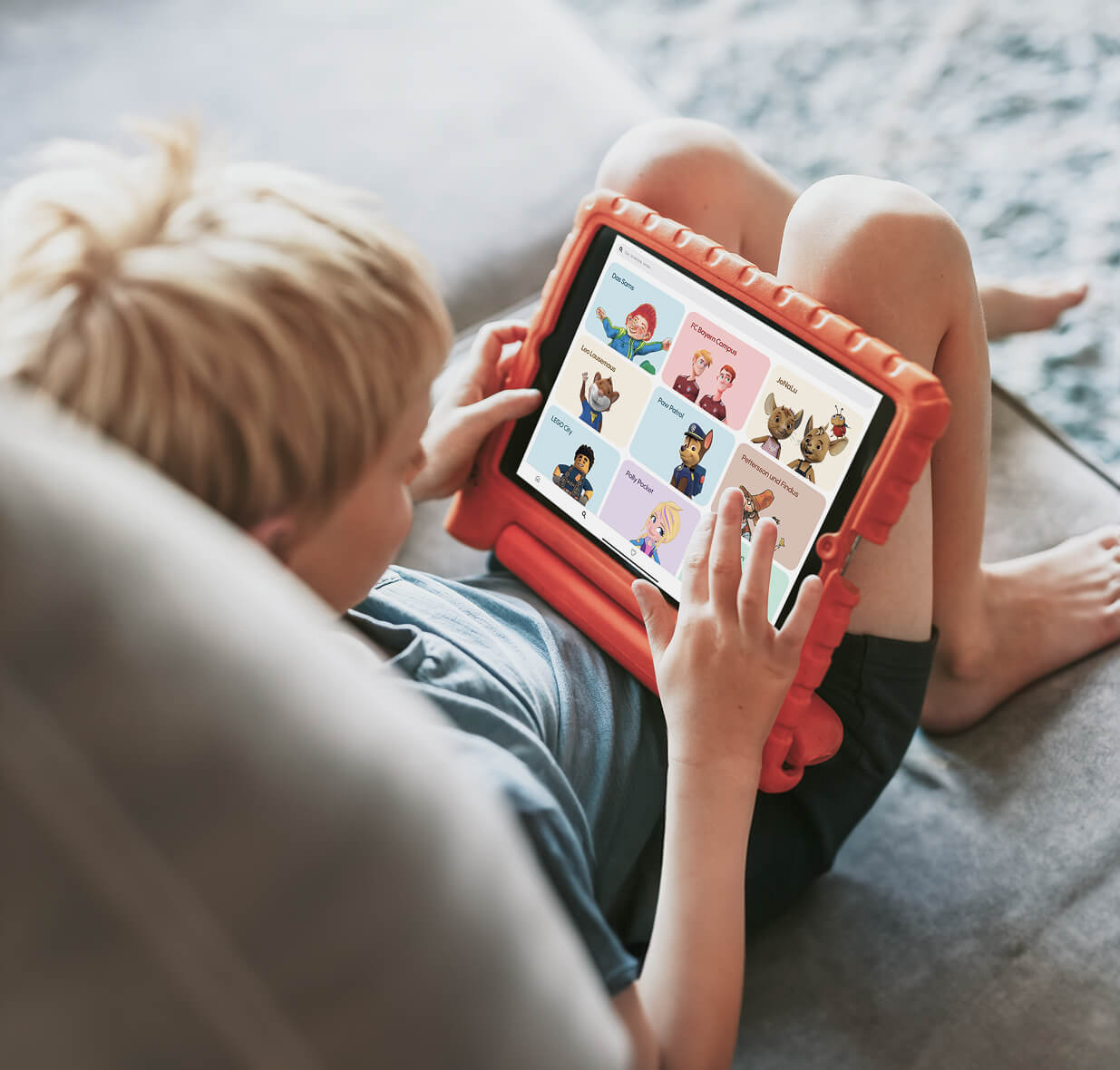
Creating high-quality UI at Lylli has never been about visual polish alone. A central part of my role has been designing interfaces that feel immediately understandable, particularly for young children who cannot yet rely on written copy to navigate the product.
This has fundamentally shaped how I approach interface design. Instead of depending on text to explain interactions, I’ve focused on creating clear visual hierarchies, consistent interaction patterns and intuitive navigation through layout, colour, iconography and motion. Every decision is made to reduce cognitive load and help children build confidence as they explore the product independently.
Supporting this experience required more than individual screens. Throughout my time at Lylli, I’ve continuously evolved our design system to ensure consistency across iOS, Android, Amazon Fire and the web, while accommodating multiple languages, content partners and visual identities. The result is a scalable design foundation that allows new features to feel familiar from the moment they’re introduced.
An equally important part of this craft has been understanding the technical realities behind the product. Through close collaboration with engineers, I’ve developed a strong understanding of our platform’s architecture and implementation constraints. This enables me to design solutions that balance user value, business goals and engineering effort, identifying opportunities where thoughtful design can create the greatest impact with minimal technical complexity.
What This Experience Taught Me
Working at Lylli has fundamentally shaped how I think about product design.
Designing for young children reinforced that the simplest experiences are often the most difficult to create. When users cannot rely on written language, every interaction must communicate through structure, consistency and visual clarity. That mindset continues to influence how I approach every product, regardless of audience.
Building a product within a small, fast-moving team also taught me the value of breadth. Moving fluidly between strategy, UX, UI, systems thinking, AI-powered prototyping and implementation has shown me that the strongest product decisions happen when these disciplines inform one another rather than exist in isolation.
Most importantly, this experience strengthened my belief that great product design is about building systems, not just interfaces. The most valuable work often happens beneath the surface, creating scalable foundations that help teams move faster while making technology feel simpler for the people using it.
Additional Product Highlights
Located
StockholmSweden
CONTACT
birk.janz@gmail.com
SOCIAL
Birk Janz
Work
About
Contact
Case Study
Lylli
Lylli is a children’s reading and audiobook platform designed to help families build sustainable reading habits through playful and engaging digital experiences.
Available across mobile and web, the product serves families in Swedish- and German-speaking markets and is currently expanding into English-speaking markets. The platform combines books, audio, reading motivation systems and content discovery experiences designed specifically for young children.
- Role: Sole Product Designer
- Period: 2023–Present
- Platforms: iOS, Android, Web, Internal Tools
- Markets: SE, DE, AT, CH, US (launch phase)
- Scope: Product Strategy, UX, UI, Design Systems, AI Prototyping, Content Architecture, Research
Shaping the Product
Over the last 3.5 years, I’ve helped shape Lylli as it grew from an early-stage reading app into a multi-market product experience used by thousands of families across Europe and North America.
As the sole designer for most of this journey, I’ve worked across product strategy, UX, UI, design systems, onboarding, engagement features and internal tooling. My role has evolved alongside the company, combining hands-on product design with systems thinking, rapid prototyping and AI-assisted workflows.
Focus Areas
- Product strategy and UX
- Engagement and reading motivation
- Product UI and design systems
- AI-assisted prototyping
- Internal tooling and content systems
- Cross-platform product experiences
Contributions
- Helped scale Lylli from an early-stage product into a multi-market platform
- Established the visual product foundation across app, web and internal tools
- Led the design of onboarding and long-term engagement experiences
- Introduced AI-powered workflows that significantly accelerated prototyping and product validation
- Built implementation-ready concepts that enabled faster collaboration between design and engineering
Driving Product Evolution
Beyond designing individual features, I’ve played an active role in shaping how the product evolves over time, connecting business goals, user needs and technical possibilities into cohesive product experiences.
Working closely with product managers, UX researchers, developers and other stakeholders, I’ve contributed throughout the entire product development process, from product strategy, customer insights and discovery to concept development, prototyping, implementation, QA and release validation. This continuous involvement allows me to make design decisions that remain grounded in both user needs and technical reality.
As the product has matured, much of my work has focused on creating scalable foundations rather than isolated features. This includes evolving the design system, refining interaction patterns, improving onboarding, strengthening content discovery and introducing workflows that allow both the product and the organisation to grow more consistently over time.
Rather than viewing design as a handoff, I see it as an ongoing responsibility. Staying closely involved throughout implementation helps ensure that strategic ideas translate into polished, accessible and technically feasible products, while continuously improving the quality of future work through reusable systems and shared product knowledge.
Designing Reading Motivation
Creating motivation that strengthens, rather than competes with, the reading experience
One of the recurring product challenges at Lylli has been encouraging children to return to reading without shifting attention away from what matters most: the stories themselves.
Rather than relying on traditional gamification, I explored how motivation could become a natural extension of the reading experience. The goal wasn’t to maximise engagement, but to build curiosity, routine and emotional connection in ways that felt meaningful for both children and parents.
One example of this thinking is Reading Rocket, a seasonal reading experience where completed books fuel a shared journey through space alongside one of Lylli’s characters.
Throughout the project, the focus remained on simplifying interactions, reducing cognitive load and ensuring that every motivational element supported reading rather than competing with it.
More than a single feature, the project established a design approach for future engagement systems, showing how thoughtful product design can strengthen long-term reading habits without relying on distracting reward mechanics.
AI-Driven Product Development
Building complete product experiences through AI-powered workflows
Over the past year, AI has fundamentally changed the way I work as a Product Designer. Rather than using it simply to work faster, I’ve integrated AI throughout my design process to build, prototype and validate complete product experiences that previously required contributions from several specialist disciplines.
Instead of stopping at wireframes or static mockups, I now create interactive prototypes that combine product logic, visual design, motion, voice experiences and supporting content into cohesive experiences. This allows stakeholders and users to interact with concepts that feel much closer to real products, resulting in more meaningful feedback and faster iteration throughout the design process.
Projects like Reading Rocket demonstrate this shift. Beyond designing the experience itself, I developed the progression logic, created the visual assets using AI image generation, produced motion assets, generated AI-powered voice experiences and designed supporting onboarding content. AI enabled me to independently build and validate an end-to-end product experience that would traditionally have required multiple teams and significantly longer development cycles.
Today, AI is embedded across my entire workflow. From expanding design systems in Figma and generating production-ready assets to building functional prototypes and implementation-ready concepts, it allows me to move seamlessly between strategy, design and execution. Rather than replacing product design, AI has expanded what I’m able to build, making it possible to validate ideas earlier, collaborate more effectively and deliver significantly more complete product concepts before engineering begins.
Designing Scalable Content Systems
Creating the foundation for personalized content experiences
At Lylli, the books themselves are only one part of the product. The real user experience is shaped by how content is organised, connected and presented to every child. As our library continued to grow across languages and markets, creating meaningful reading experiences increasingly depended on building the right content foundation behind the scenes.
This project began by understanding the underlying system rather than designing interfaces. Through research, stakeholder workshops and close collaboration with the content team, I mapped relationships between books, themes, collections, characters and editorial workflows to create a scalable information architecture capable of supporting future growth.
The objective wasn’t simply to improve internal processes. It was to enable smarter content discovery, more relevant recommendations and richer reading journeys by giving the product a stronger understanding of its own content.
Working iteratively with functional prototypes allowed us to validate complex workflows early while creating a shared understanding across design, product and engineering before implementation began.
Although largely invisible to end users, this work has become a strategic foundation for the product. By strengthening the underlying content structure, we’ve created better conditions for personalization, editorial curation and future product experiences that help every child discover the right stories at the right time.
Crafting Cohesive Product Experiences
Designing interfaces that feel intuitive before they need explanation
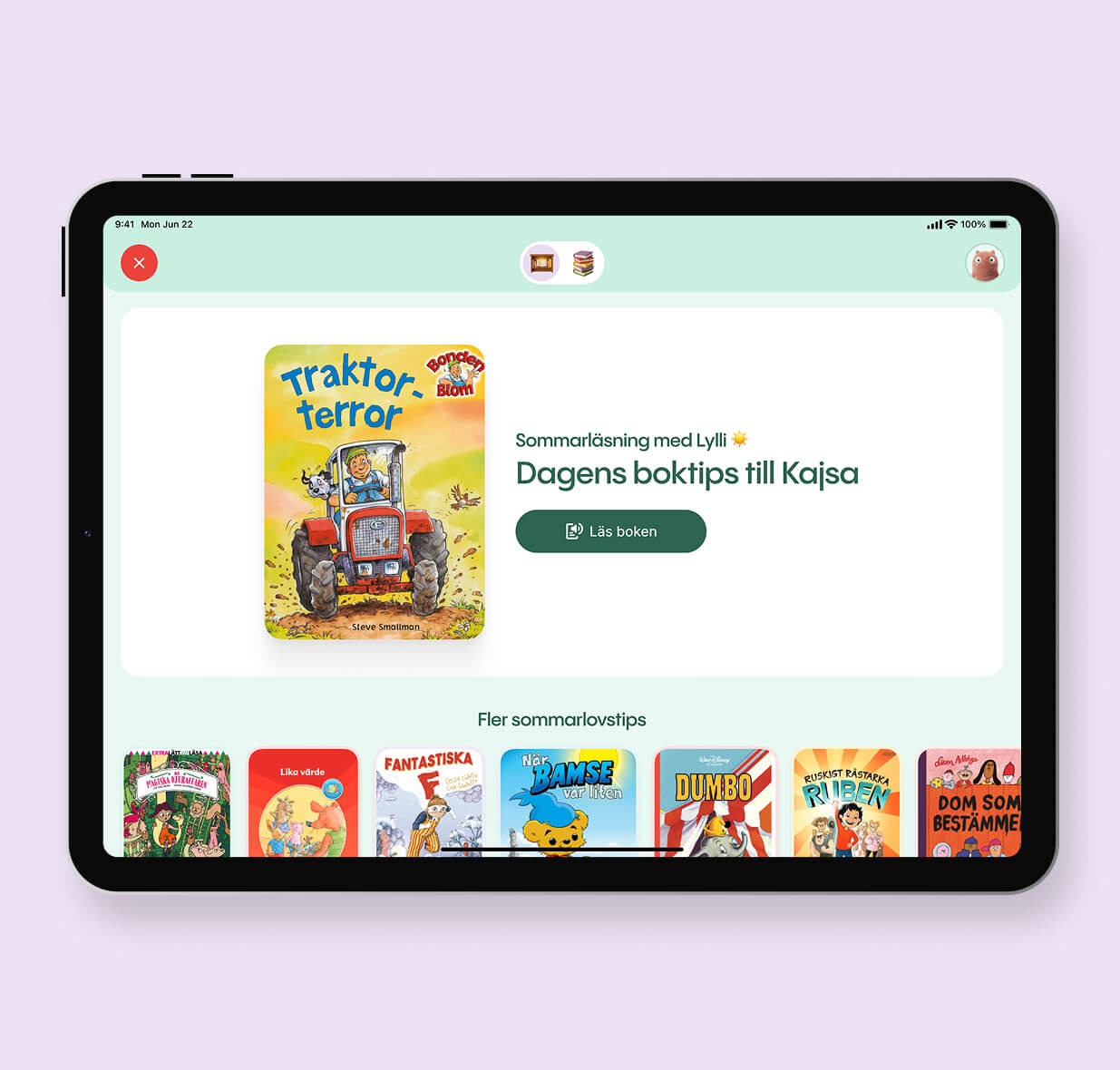
Creating high-quality UI at Lylli has never been about visual polish alone. A central part of my role has been designing interfaces that feel immediately understandable, particularly for young children who cannot yet rely on written copy to navigate the product.
This has fundamentally shaped how I approach interface design. Instead of depending on text to explain interactions, I’ve focused on creating clear visual hierarchies, consistent interaction patterns and intuitive navigation through layout, colour, iconography and motion. Every decision is made to reduce cognitive load and help children build confidence as they explore the product independently.
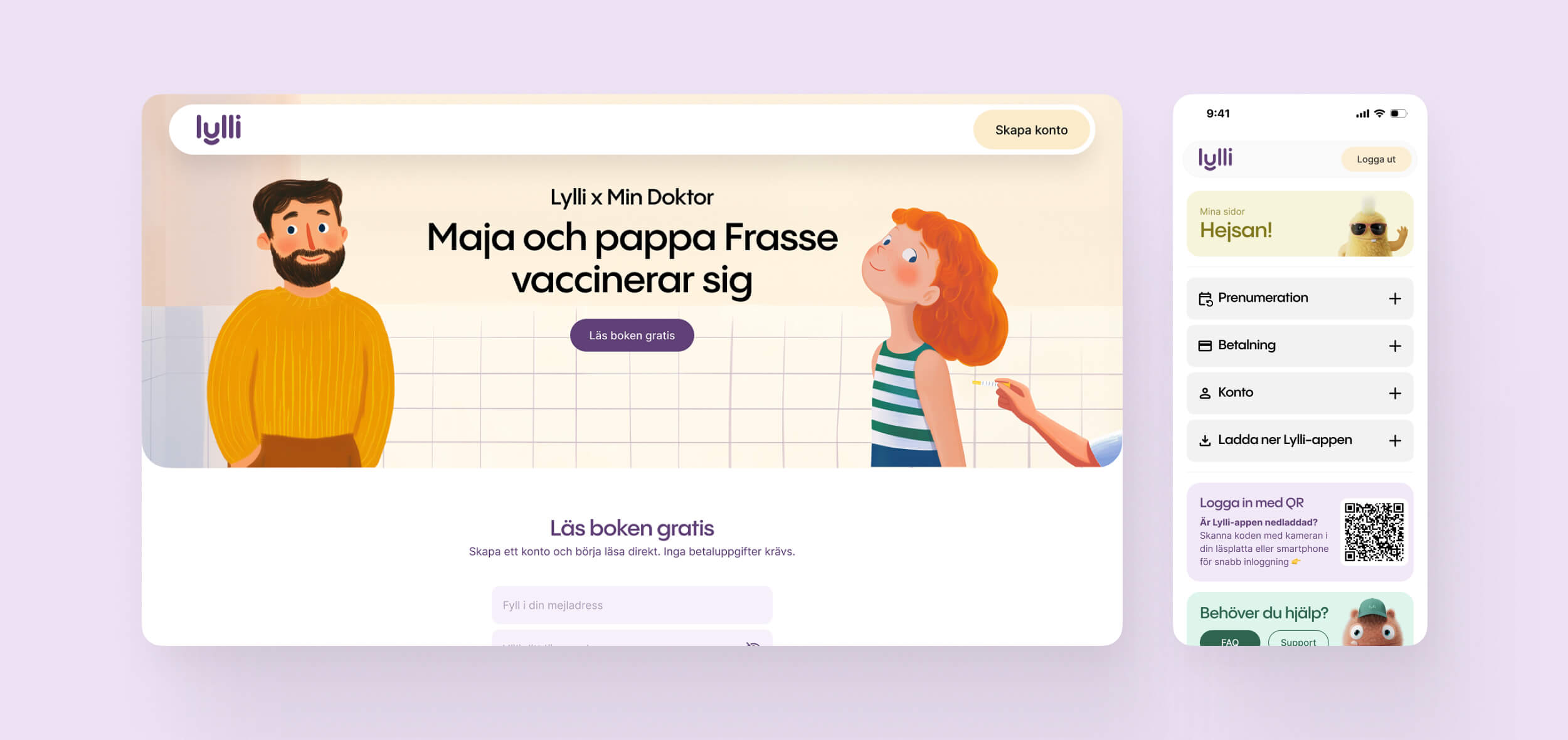
Supporting this experience required more than individual screens. Throughout my time at Lylli, I’ve continuously evolved our design system to ensure consistency across iOS, Android, Amazon Fire and the web, while accommodating multiple languages, content partners and visual identities. The result is a scalable design foundation that allows new features to feel familiar from the moment they’re introduced.
An equally important part of this craft has been understanding the technical realities behind the product. Through close collaboration with engineers, I’ve developed a strong understanding of our platform’s architecture and implementation constraints. This enables me to design solutions that balance user value, business goals and engineering effort, identifying opportunities where thoughtful design can create the greatest impact with minimal technical complexity.
What This Experience Taught Me
Working at Lylli has fundamentally shaped how I think about product design.
Designing for young children reinforced that the simplest experiences are often the most difficult to create. When users cannot rely on written language, every interaction must communicate through structure, consistency and visual clarity. That mindset continues to influence how I approach every product, regardless of audience.
Building a product within a small, fast-moving team also taught me the value of breadth. Moving fluidly between strategy, UX, UI, systems thinking, AI-powered prototyping and implementation has shown me that the strongest product decisions happen when these disciplines inform one another rather than exist in isolation.
Most importantly, this experience strengthened my belief that great product design is about building systems, not just interfaces. The most valuable work often happens beneath the surface, creating scalable foundations that help teams move faster while making technology feel simpler for the people using it.
Additional Product Highlights
Located
StockholmSweden
CONTACT
birk.janz@gmail.com
SOCIAL
Birk Janz
Work
About
Contact
Case Study
Lylli
Lylli is a children’s reading and audiobook platform designed to help families build sustainable reading habits through playful and engaging digital experiences.
Available across mobile and web, the product serves families in Swedish- and German-speaking markets and is currently expanding into English-speaking markets. The platform combines books, audio, reading motivation systems and content discovery experiences designed specifically for young children.
- Role: Sole Product Designer
- Period: 2023–Present
- Platforms: iOS, Android, Web, Internal Tools
- Markets: SE, DE, AT, CH, US (launch phase)
- Scope: Product Strategy, UX, UI, Design Systems, AI Prototyping, Content Architecture, Research
Shaping the Product
Over the last 3.5 years, I’ve helped shape Lylli as it grew from an early-stage reading app into a multi-market product experience used by thousands of families across Europe and North America.
As the sole designer for most of this journey, I’ve worked across product strategy, UX, UI, design systems, onboarding, engagement features and internal tooling. My role has evolved alongside the company, combining hands-on product design with systems thinking, rapid prototyping and AI-assisted workflows.
Focus Areas
- Product strategy and UX
- Engagement and reading motivation
- Product UI and design systems
- AI-assisted prototyping
- Internal tooling and content systems
- Cross-platform product experiences
Contributions
- Helped scale Lylli from an early-stage product into a multi-market platform
- Established the visual product foundation across app, web and internal tools
- Led the design of onboarding and long-term engagement experiences
- Introduced AI-powered workflows that significantly accelerated prototyping and product validation
- Built implementation-ready concepts that enabled faster collaboration between design and engineering
Driving Product Evolution
Beyond designing individual features, I’ve played an active role in shaping how the product evolves over time, connecting business goals, user needs and technical possibilities into cohesive product experiences.
Working closely with product managers, UX researchers, developers and other stakeholders, I’ve contributed throughout the entire product development process, from product strategy, customer insights and discovery to concept development, prototyping, implementation, QA and release validation. This continuous involvement allows me to make design decisions that remain grounded in both user needs and technical reality.
As the product has matured, much of my work has focused on creating scalable foundations rather than isolated features. This includes evolving the design system, refining interaction patterns, improving onboarding, strengthening content discovery and introducing workflows that allow both the product and the organisation to grow more consistently over time.
Rather than viewing design as a handoff, I see it as an ongoing responsibility. Staying closely involved throughout implementation helps ensure that strategic ideas translate into polished, accessible and technically feasible products, while continuously improving the quality of future work through reusable systems and shared product knowledge.
Designing Reading Motivation
Creating motivation that strengthens, rather than competes with, the reading experience
One of the recurring product challenges at Lylli has been encouraging children to return to reading without shifting attention away from what matters most: the stories themselves.
Rather than relying on traditional gamification, I explored how motivation could become a natural extension of the reading experience. The goal wasn’t to maximise engagement, but to build curiosity, routine and emotional connection in ways that felt meaningful for both children and parents.
One example of this thinking is Reading Rocket, a seasonal reading experience where completed books fuel a shared journey through space alongside one of Lylli’s characters.
Throughout the project, the focus remained on simplifying interactions, reducing cognitive load and ensuring that every motivational element supported reading rather than competing with it.
More than a single feature, the project established a design approach for future engagement systems, showing how thoughtful product design can strengthen long-term reading habits without relying on distracting reward mechanics.
AI-Driven Product Development
Building complete product experiences through AI-powered workflows
Over the past year, AI has fundamentally changed the way I work as a Product Designer. Rather than using it simply to work faster, I’ve integrated AI throughout my design process to build, prototype and validate complete product experiences that previously required contributions from several specialist disciplines.
Instead of stopping at wireframes or static mockups, I now create interactive prototypes that combine product logic, visual design, motion, voice experiences and supporting content into cohesive experiences. This allows stakeholders and users to interact with concepts that feel much closer to real products, resulting in more meaningful feedback and faster iteration throughout the design process.
Projects like Reading Rocket demonstrate this shift. Beyond designing the experience itself, I developed the progression logic, created the visual assets using AI image generation, produced motion assets, generated AI-powered voice experiences and designed supporting onboarding content. AI enabled me to independently build and validate an end-to-end product experience that would traditionally have required multiple teams and significantly longer development cycles.
Today, AI is embedded across my entire workflow. From expanding design systems in Figma and generating production-ready assets to building functional prototypes and implementation-ready concepts, it allows me to move seamlessly between strategy, design and execution. Rather than replacing product design, AI has expanded what I’m able to build, making it possible to validate ideas earlier, collaborate more effectively and deliver significantly more complete product concepts before engineering begins.
Designing Scalable Content Systems
Creating the foundation for personalized content experiences
At Lylli, the books themselves are only one part of the product. The real user experience is shaped by how content is organised, connected and presented to every child. As our library continued to grow across languages and markets, creating meaningful reading experiences increasingly depended on building the right content foundation behind the scenes.
This project began by understanding the underlying system rather than designing interfaces. Through research, stakeholder workshops and close collaboration with the content team, I mapped relationships between books, themes, collections, characters and editorial workflows to create a scalable information architecture capable of supporting future growth.
The objective wasn’t simply to improve internal processes. It was to enable smarter content discovery, more relevant recommendations and richer reading journeys by giving the product a stronger understanding of its own content.
Working iteratively with functional prototypes allowed us to validate complex workflows early while creating a shared understanding across design, product and engineering before implementation began.
Although largely invisible to end users, this work has become a strategic foundation for the product. By strengthening the underlying content structure, we’ve created better conditions for personalization, editorial curation and future product experiences that help every child discover the right stories at the right time.
Crafting Cohesive Product Experiences
Designing interfaces that feel intuitive before they need explanation
Creating high-quality UI at Lylli has never been about visual polish alone. A central part of my role has been designing interfaces that feel immediately understandable, particularly for young children who cannot yet rely on written copy to navigate the product.
This has fundamentally shaped how I approach interface design. Instead of depending on text to explain interactions, I’ve focused on creating clear visual hierarchies, consistent interaction patterns and intuitive navigation through layout, colour, iconography and motion. Every decision is made to reduce cognitive load and help children build confidence as they explore the product independently.
Supporting this experience required more than individual screens. Throughout my time at Lylli, I’ve continuously evolved our design system to ensure consistency across iOS, Android, Amazon Fire and the web, while accommodating multiple languages, content partners and visual identities. The result is a scalable design foundation that allows new features to feel familiar from the moment they’re introduced.
An equally important part of this craft has been understanding the technical realities behind the product. Through close collaboration with engineers, I’ve developed a strong understanding of our platform’s architecture and implementation constraints. This enables me to design solutions that balance user value, business goals and engineering effort, identifying opportunities where thoughtful design can create the greatest impact with minimal technical complexity.
What This Experience Taught Me
Working at Lylli has fundamentally shaped how I think about product design.
Designing for young children reinforced that the simplest experiences are often the most difficult to create. When users cannot rely on written language, every interaction must communicate through structure, consistency and visual clarity. That mindset continues to influence how I approach every product, regardless of audience.
Building a product within a small, fast-moving team also taught me the value of breadth. Moving fluidly between strategy, UX, UI, systems thinking, AI-powered prototyping and implementation has shown me that the strongest product decisions happen when these disciplines inform one another rather than exist in isolation.
Most importantly, this experience strengthened my belief that great product design is about building systems, not just interfaces. The most valuable work often happens beneath the surface, creating scalable foundations that help teams move faster while making technology feel simpler for the people using it.
Additional Product Highlights
Located
StockholmSweden
CONTACT
birk.janz@gmail.com
SOCIAL
Birk Janz
Work
About
Contact
Case Study
Lylli
Lylli is a children’s reading and audiobook platform designed to help families build sustainable reading habits through playful and engaging digital experiences.
Available across mobile and web, the product serves families in Swedish- and German-speaking markets and is currently expanding into English-speaking markets. The platform combines books, audio, reading motivation systems and content discovery experiences designed specifically for young children.
- Role: Sole Product Designer
- Period: 2023–Present
- Platforms: iOS, Android, Web, Internal Tools
- Markets: SE, DE, AT, CH, US (launch phase)
- Scope: Product Strategy, UX, UI, Design Systems, AI Prototyping, Content Architecture, Research
Shaping the Product
Over the last 3.5 years, I’ve helped shape Lylli as it grew from an early-stage reading app into a multi-market product experience used by thousands of families across Europe and North America.
As the sole designer for most of this journey, I’ve worked across product strategy, UX, UI, design systems, onboarding, engagement features and internal tooling. My role has evolved alongside the company, combining hands-on product design with systems thinking, rapid prototyping and AI-assisted workflows.
Focus Areas
- Product strategy and UX
- Engagement and reading motivation
- Product UI and design systems
- AI-assisted prototyping
- Internal tooling and content systems
- Cross-platform product experiences
Contributions
- Helped scale Lylli from an early-stage product into a multi-market platform
- Established the visual product foundation across app, web and internal tools
- Led the design of onboarding and long-term engagement experiences
- Introduced AI-powered workflows that significantly accelerated prototyping and product validation
- Built implementation-ready concepts that enabled faster collaboration between design and engineering
Driving Product Evolution
Beyond designing individual features, I’ve played an active role in shaping how the product evolves over time, connecting business goals, user needs and technical possibilities into cohesive product experiences.
Working closely with product managers, UX researchers, developers and other stakeholders, I’ve contributed throughout the entire product development process, from product strategy, customer insights and discovery to concept development, prototyping, implementation, QA and release validation. This continuous involvement allows me to make design decisions that remain grounded in both user needs and technical reality.
As the product has matured, much of my work has focused on creating scalable foundations rather than isolated features. This includes evolving the design system, refining interaction patterns, improving onboarding, strengthening content discovery and introducing workflows that allow both the product and the organisation to grow more consistently over time.
Rather than viewing design as a handoff, I see it as an ongoing responsibility. Staying closely involved throughout implementation helps ensure that strategic ideas translate into polished, accessible and technically feasible products, while continuously improving the quality of future work through reusable systems and shared product knowledge.
Designing Reading Motivation
Creating motivation that strengthens, rather than competes with, the reading experience
One of the recurring product challenges at Lylli has been encouraging children to return to reading without shifting attention away from what matters most: the stories themselves.
Rather than relying on traditional gamification, I explored how motivation could become a natural extension of the reading experience. The goal wasn’t to maximise engagement, but to build curiosity, routine and emotional connection in ways that felt meaningful for both children and parents.
One example of this thinking is Reading Rocket, a seasonal reading experience where completed books fuel a shared journey through space alongside one of Lylli’s characters.
Throughout the project, the focus remained on simplifying interactions, reducing cognitive load and ensuring that every motivational element supported reading rather than competing with it.
More than a single feature, the project established a design approach for future engagement systems, showing how thoughtful product design can strengthen long-term reading habits without relying on distracting reward mechanics.
AI-Driven Product Development
Building complete product experiences through AI-powered workflows
Over the past year, AI has fundamentally changed the way I work as a Product Designer. Rather than using it simply to work faster, I’ve integrated AI throughout my design process to build, prototype and validate complete product experiences that previously required contributions from several specialist disciplines.
Instead of stopping at wireframes or static mockups, I now create interactive prototypes that combine product logic, visual design, motion, voice experiences and supporting content into cohesive experiences. This allows stakeholders and users to interact with concepts that feel much closer to real products, resulting in more meaningful feedback and faster iteration throughout the design process.
Projects like Reading Rocket demonstrate this shift. Beyond designing the experience itself, I developed the progression logic, created the visual assets using AI image generation, produced motion assets, generated AI-powered voice experiences and designed supporting onboarding content. AI enabled me to independently build and validate an end-to-end product experience that would traditionally have required multiple teams and significantly longer development cycles.
Today, AI is embedded across my entire workflow. From expanding design systems in Figma and generating production-ready assets to building functional prototypes and implementation-ready concepts, it allows me to move seamlessly between strategy, design and execution. Rather than replacing product design, AI has expanded what I’m able to build, making it possible to validate ideas earlier, collaborate more effectively and deliver significantly more complete product concepts before engineering begins.
Designing Scalable Content Systems
Creating the foundation for personalized content experiences
At Lylli, the books themselves are only one part of the product. The real user experience is shaped by how content is organised, connected and presented to every child. As our library continued to grow across languages and markets, creating meaningful reading experiences increasingly depended on building the right content foundation behind the scenes.
This project began by understanding the underlying system rather than designing interfaces. Through research, stakeholder workshops and close collaboration with the content team, I mapped relationships between books, themes, collections, characters and editorial workflows to create a scalable information architecture capable of supporting future growth.
The objective wasn’t simply to improve internal processes. It was to enable smarter content discovery, more relevant recommendations and richer reading journeys by giving the product a stronger understanding of its own content.
Working iteratively with functional prototypes allowed us to validate complex workflows early while creating a shared understanding across design, product and engineering before implementation began.
Although largely invisible to end users, this work has become a strategic foundation for the product. By strengthening the underlying content structure, we’ve created better conditions for personalization, editorial curation and future product experiences that help every child discover the right stories at the right time.
Crafting Cohesive Product Experiences
Designing interfaces that feel intuitive before they need explanation
Creating high-quality UI at Lylli has never been about visual polish alone. A central part of my role has been designing interfaces that feel immediately understandable, particularly for young children who cannot yet rely on written copy to navigate the product.
This has fundamentally shaped how I approach interface design. Instead of depending on text to explain interactions, I’ve focused on creating clear visual hierarchies, consistent interaction patterns and intuitive navigation through layout, colour, iconography and motion. Every decision is made to reduce cognitive load and help children build confidence as they explore the product independently.
Supporting this experience required more than individual screens. Throughout my time at Lylli, I’ve continuously evolved our design system to ensure consistency across iOS, Android, Amazon Fire and the web, while accommodating multiple languages, content partners and visual identities. The result is a scalable design foundation that allows new features to feel familiar from the moment they’re introduced.
An equally important part of this craft has been understanding the technical realities behind the product. Through close collaboration with engineers, I’ve developed a strong understanding of our platform’s architecture and implementation constraints. This enables me to design solutions that balance user value, business goals and engineering effort, identifying opportunities where thoughtful design can create the greatest impact with minimal technical complexity.
What This Experience Taught Me
Working at Lylli has fundamentally shaped how I think about product design.
Designing for young children reinforced that the simplest experiences are often the most difficult to create. When users cannot rely on written language, every interaction must communicate through structure, consistency and visual clarity. That mindset continues to influence how I approach every product, regardless of audience.
Building a product within a small, fast-moving team also taught me the value of breadth. Moving fluidly between strategy, UX, UI, systems thinking, AI-powered prototyping and implementation has shown me that the strongest product decisions happen when these disciplines inform one another rather than exist in isolation.
Most importantly, this experience strengthened my belief that great product design is about building systems, not just interfaces. The most valuable work often happens beneath the surface, creating scalable foundations that help teams move faster while making technology feel simpler for the people using it.
Additional Product Highlights
Located
StockholmSweden
CONTACT
birk.janz@gmail.com
SOCIAL